Case Study: Municipality – Strategic Outsourcing of Document Accessibility
From an HTML-first strategy to flexible handling of remaining PDF documents. A municipality was working purposefully to modernize its website and had chosen a clear HTML-first strategy. The goal was to minimize the use of PDF documents going forward. At the same time, however, the municipality faced a familiar challenge: there would still be a residual group of documents that needed to be handled in terms of web accessibility.
The municipality did not wish to build up internal resources to fully manage document accessibility. Instead, the focus was on outsourcing the task to specialists and establishing a pragmatic, long-term strategy.
The solution was therefore based on a combination of Aliro OnDemand, Aliro Tagging, and ongoing analysis using Aliro Finder.
The challenge: How should we handle the remaining PDFs?
The municipality had already decided that future content would primarily be published in HTML. Nevertheless, there would still be documents and publications that required the PDF format.
The question therefore became:
How do you handle the documents that are unavoidable—without creating unnecessary costs and work processes?
The focus was particularly on:
- Developing a pragmatic strategy for PDF documents
- Avoiding unnecessary tagging of documents with low relevance
- To ensure compliance with applicable standards
- Maintaining an overview of the document portfolio on an ongoing basis
The municipality wanted a model that took into account finances, resources, and residents' needs all at once.


First step: Analysis and a data-driven overview
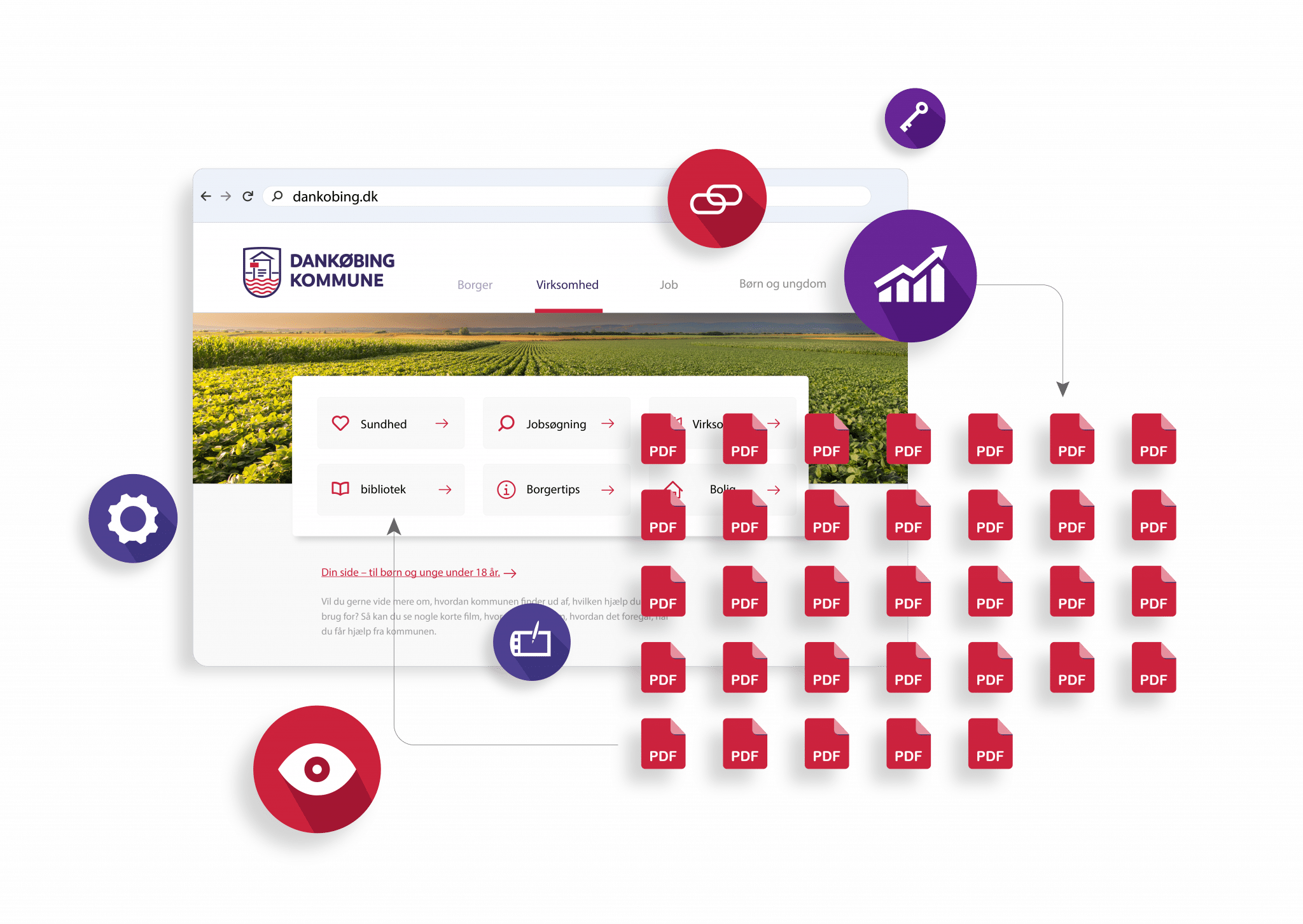
As part of the process, the municipality’s website was analyzed using Aliro Finder. Using crawling and data from Siteimprove, a comprehensive overview was created of:
- PDF documents on the website
- Number of clicks and usage patterns
- Duplicates and document variants
- Documents that were no longer active
- Document types and metadata
The results enabled the municipality to take a more strategic approach to the documents and prioritize its efforts based on actual usage and relevance.
The analysis also showed that some documents should no longer be transferred to the new website at all.
The Solution: OnDemand and Tagging Combined
The municipality chose a model in which different types of documents were handled differently. This strategy was also described in the municipality’s accessibility statement, so it was clear:
- When citizens could order documents through the OnDemand solution
- When the documents were made fully available
This created a transparent and flexible approach to document accessibility.
1. Aliro Tagging
Aliro Tagging was used for key documents and publications. Aliro Docs handles the entire process, including:
- Manual tagging and structuring
- Proper tagging
- Logical reading order
- Validation and Quality Assurance
All documents will be returned in accordance with:
- WCAG
- PDF/UA
- PDF/A standards
- Recommendations from the Agency for Digitization
2. Aliro OnDemand
For documents of lower relevance or limited use, Aliro OnDemand was chosen as the solution. This meant that:
- Residents could request an accessible version if needed
- The municipality avoided spending resources on documents with very low traffic
- The documents could still be available on the website
This provided the municipality with a solution that allowed the documents to remain accessible—without everything having to be tagged in advance.
➤ Document exchange was handled through the Aliro Portal, which provided the municipality with a simple and secure workflow.
Stay up to date with Aliro Finder
The municipality continues to use Aliro Finder on an ongoing basis to maintain an overview of its document portfolio.
This makes it possible to:
- Follow updates on the website
- Stick to the chosen strategy
- Identify new documents and duplicates
- Prioritize efforts based on data and actual usage
As a result, document accessibility became not a one-time project, but an ongoing and strategic process.
The result: A pragmatic and long-term model
With the combination of Aliro OnDemand, Aliro Tagging, and Aliro Finder, the municipality gained a solution that balances compliance, resources, and the needs of residents.
The result was:
- A flexible strategy for managing PDF documents
- Outsourcing complex accessibility tasks to specialists
- Option for citizens to place OnDemand orders directly
- Ongoing overview of the document portfolio
The municipality thus gained a model that allowed it to address accessibility in a pragmatic and sustainable way—without compromising on quality or compliance.


How can we help you?
Do you also use an HTML-first strategy and want a pragmatic approach to managing PDF documents? If so, contact us to learn more about how Aliro OnDemand, Aliro Tagging, and Aliro Finder can support your document accessibility efforts.